Fall Foliage Outings With Your Baby: When to Go and What to Pack
Want to take your baby to see the fall colors but not sure when it's okay or what to bring? Here's a warm, practical guide to age-by-age outing timing, the best times of day, a packing checklist, sun, temperature, and tick safety, plus tips for great foliage photos.
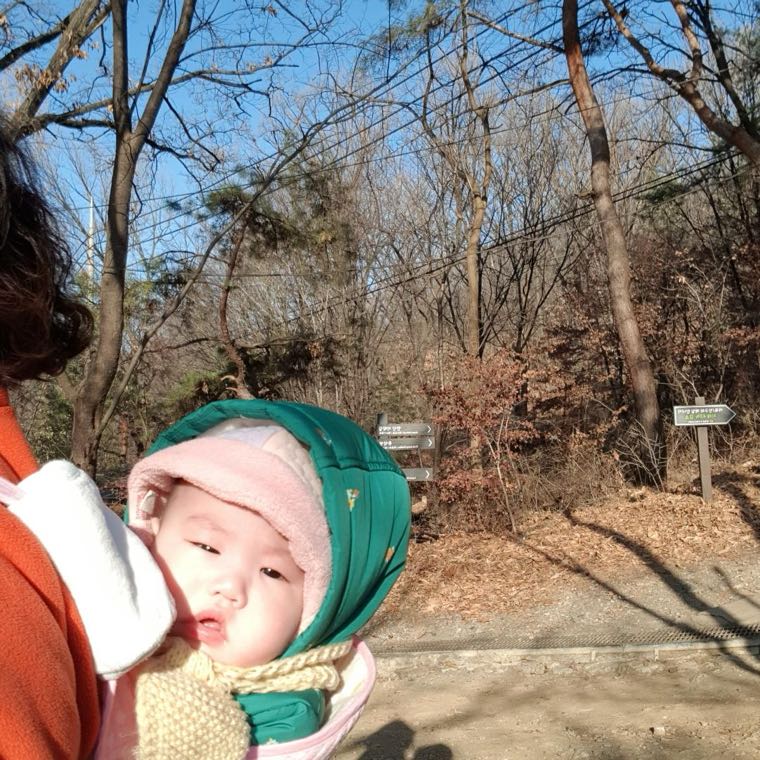
When the leaves turn, it's hard not to picture your baby out among all that color. But a little worry usually comes first: "Is my baby too young for this?" and "What on earth do I need to bring?" The air is cooler now, your little one is still so small, and that makes it easy to second-guess the whole idea.
So here's the short version up front: as long as you keep an eye on your baby's condition and the weather, a fall outing is absolutely something you can enjoy together. You don't need a grand destination. A short walk through a leaf-covered park near home is a wonderful bit of fresh air and discovery for a baby.
In this guide we'll walk through when babies are ready for outings by age, the best times of day to go, what to pack, how to stay safe, and a few tips for taking photos you'll want to keep. Take it slow, keep it safe, and enjoy your baby's very first fall.
Table of Contents
- When is my baby old enough to go out?
- Best time of day and weather
- Your outing packing checklist
- Staying safe: sun, temperature, and ticks
- How to take great fall foliage photos
- Enjoying the moment together
1. When is my baby old enough to go out?
There's no magic date on the calendar. A better guide is your baby's growing ability to regulate their own body temperature, and most families build up to longer outings gradually.
- Around 2 to 3 months: Start with short 5 to 10 minute walks right outside your door to help your baby get used to the fresh air.
- After about 4 months: Depending on how your baby is doing, outings of 1 to 2 hours become more comfortable.
What matters more than the exact age is how your baby is doing that particular day. A day when they've slept and fed well, with nice weather, is perfect for a short trip. With a newborn, it's best to skip crowded places and avoid sudden swings in temperature. Every baby is different, so if you have any concerns, check with your pediatrician.
2. Best time of day and weather
Fall brings big temperature swings between morning and evening, so timing matters. The warmer midday stretch tends to be most comfortable for an outing, but that's also when the sun is strongest, so plan to lean on shade (more on sun safety below).
Before you head out, always check the weather and air-quality forecast. On days with strong wind or poor air quality, there's no need to push it. Keeping your baby in and simply airing out the house is plenty. And when it's chilly, keep the outing short.
3. Your outing packing checklist
Packing ahead means you won't be caught off guard when you're already out the door.
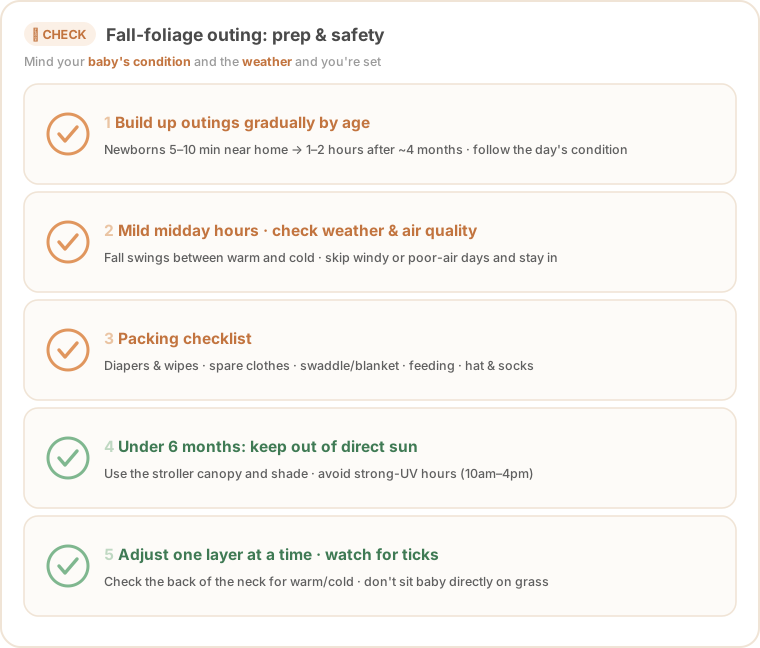
- Diapers (3 to 5), wipes, and a bag for trash: the absolute basics.
- A change of clothes and a few cloths: for sweat, spit-up, or spills.
- A swaddle or light blanket: for temperature control. Cover up when it's cool, peel it back when it's warm.
- Feeding supplies: breast milk, formula, bottles, kept within easy reach.
- A hat and socks: ready for both sun and the chill.
The key with fall clothing is layering you can add or remove one piece at a time as the temperature shifts. Adjust a single layer at a time rather than bundling up or stripping down all at once.
4. Staying safe: sun, temperature, and ticks
- Sun: Babies under 6 months should be kept out of direct sunlight. The American Academy of Pediatrics recommends moving your baby into the shade, under a tree, umbrella, or stroller canopy, and avoiding the strong-UV hours, roughly 10 a.m. to 4 p.m. After 6 months, you can use a small amount of a mineral sunscreen with zinc oxide or titanium dioxide on areas that clothing doesn't cover; ask your pediatrician for a recommendation.
- Temperature: Touch the back of your baby's neck. If it's sweaty, they're too warm; if their hands and feet are cold and they're fussing, they're chilly. Add or remove one layer at a time.
- Bugs and ticks: Even in fall, grassy areas can harbor ticks. Keep skin covered with long sleeves and pants, and avoid sitting or laying your baby directly on the grass. For more on this, see our guide to preventing tick bites in fall.
- Overstimulation and tiredness: A new environment can wear a baby out. If they get fussy or seem tired, don't push it; just head home.
5. How to take great fall foliage photos
A special outing deserves a few photos worth keeping. Soft, natural light in the late morning or late afternoon flatters both the foliage colors and your baby's face. Turn the flash off, since it's hard on little eyes, and shoot in short bursts while your baby is in a good mood. If you hand your little one a leaf to hold, stay right beside them so it doesn't end up in their mouth.
6. Enjoying the moment together
You don't have to walk far at all. Parking the stroller and looking up at the leaves together, or letting your baby listen to the crunch and rustle underfoot, is brand-new sensory input for them. If you want to turn those fallen leaves into a little hands-on activity, we put together a separate guide to leaf sensory play for babies. More than anything, the best part of any outing is simply meeting your baby's eyes and sharing the moment, an "ooh, look how red it is!" said right alongside them.
Frequently Asked Questions
Q. Can I take a newborn on a fall outing? A short one is fine, but it's best not to overdo it. Start around 2 to 3 months with brief walks just outside, build up slowly, and steer clear of crowds and sudden temperature changes. Let your baby's condition that day lead the way.
Q. When can I start using sunscreen? For babies under 6 months, shade, a canopy, and long clothing come before sunscreen. After 6 months you can apply a thin layer of a mineral sunscreen your pediatrician recommends on exposed skin.
Q. How long can we stay out? It depends on your baby's age and the weather. As a rough guide, think 5 to 10 minutes in the newborn stage and up to 1 to 2 hours after 4 months, and wrap up right away if your baby fusses or seems cold.
Wrapping Up
A fall foliage outing with your baby is a genuinely lovely experience, as long as you keep an eye on your baby's condition and the weather. Match the length to their age, aim for the warmer part of the day, and stay mindful of sun and temperature.
You don't have to go far. A single colorful tree near home is more than enough. Take it easy, and enjoy your baby's first fall foliage together this season.
Sources American Academy of Pediatrics (HealthyChildren.org), "Summer Sun, Heat & Air Quality: Tips to Keep Kids Safe" — https://www.healthychildren.org/English/safety-prevention/at-play/Pages/Sun-Safety-and-Protection-Tips.aspx
American Academy of Pediatrics (HealthyChildren.org), "Sunburn: Treatment & Prevention" — https://www.healthychildren.org/English/health-issues/conditions/skin/Pages/sunburn-treatment-and-prevention.aspx
American Academy of Pediatrics (HealthyChildren.org), "What's the best way to protect kids' skin from sunburn?" — https://www.healthychildren.org/English/tips-tools/ask-the-pediatrician/Pages/whats-the-best-way-to-protect-kids-skin-from-sunburn.aspx