Baby and Child Flu Vaccine 2026-2027, When to Get It and How It's Covered
A guide to the flu vaccine for babies and children in the U.S. The CDC and AAP recommend it every year from 6 months of age. Learn about doses for first-timers, timing by the end of October, where to go, and how it is usually covered at no cost through insurance or the VFC Program. Check with your pediatrician for your child.

When the weather starts to turn cold, a lot of parents begin to wonder, "Is it time to get my little one a flu shot?" And once you start looking into it, it can feel scattered: when to go, whether your child needs one dose or two, where to take a baby, and how much it will cost.
Here is the big picture first. The CDC and the American Academy of Pediatrics (AAP) recommend a flu vaccine every year for everyone 6 months and older. For most children, the flu shot is covered at no cost to you, and getting it before flu really picks up gives your child the best head start. The best place for a young child is usually the pediatrician's office.
Below, we will walk through who needs it, how many doses, when to go, where to get it, how it is usually covered, and how to prepare. Recommendations and coverage can shift a little from year to year, so before your visit, it is always worth checking with your pediatrician and the latest CDC guidance for the current season.
Who should get the flu vaccine
The recommendation is broad on purpose: the CDC and AAP advise a yearly flu vaccine for everyone 6 months of age and older, and that very much includes babies and children. Flu can be harder on young children, so an annual shot is one of the simplest ways to lower the risk of a serious illness during the season.
Babies younger than 6 months are the one group who cannot get the vaccine yet. For them, the best protection is to make sure the people around them are vaccinated, so the whole household forms a kind of shield, which is sometimes called cocooning. If you have a newborn at home, having parents, older siblings, and caregivers get their flu shots helps protect the baby who is too young for one.
How many doses does my child need
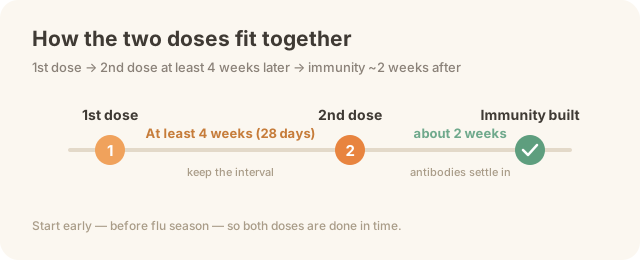
Most people need just one dose each season. But there is an important exception for young children getting the flu vaccine for the very first time. Children between 6 months and 8 years of age who are being vaccinated against flu for the first time need 2 doses, given at least 4 weeks apart. When two doses are needed, it helps to start early so both can be finished, ideally by the end of October.
Whether your child needs one dose or two depends on their age and their past flu vaccination history, and it can be easy to lose track. We break it down in more detail in a separate guide. How many flu shots does my baby need
When is the best time to go
Aim to have your child vaccinated by the end of October if you can, since that timing lines up well with the season before flu typically spreads. It takes about 2 weeks after vaccination for the body to build up protection, so a little lead time helps.
That said, if you miss the end of October, it is not too late. Getting vaccinated later in the fall or even into winter is still worthwhile, because flu can circulate well into spring. If your child hasn't had a flu shot yet this season, it is worth scheduling one soon rather than skipping it.
Last season was a severe one for children in the United States, which is part of why the AAP continues to urge that every child 6 months and older be vaccinated. The goal isn't to worry you, just to make the case that a yearly shot is a small step that meaningfully lowers the risk.
Where to get it, and how it is covered
For babies and younger children, the pediatrician's office is usually the best place to go. Your child's doctor knows their history and can answer questions on the spot. Pharmacies do offer flu shots, but they typically vaccinate children ages 3 and up, so for a child under 3, plan on the pediatrician rather than a pharmacy. Clinics and local health departments are options too, and many of these providers take part in the program described below.
As for cost, the flu shot is usually free for families. Under the Affordable Care Act, most private health plans cover the flu vaccine as preventive care with no copay and no deductible when you use an in-network provider. And for children who are uninsured, Medicaid-eligible, or American Indian or Alaska Native, the CDC's Vaccines for Children (VFC) Program provides recommended vaccines at no cost through enrolled providers. It is still a good idea to confirm the details ahead of time.
| Your situation | How the flu shot is usually covered |
|---|---|
| Private insurance | Typically no copay or deductible with an in-network provider (ACA preventive care) |
| Uninsured or Medicaid-eligible child | May qualify for no-cost vaccines through the VFC Program at an enrolled provider |
| American Indian / Alaska Native child | Also eligible for the VFC Program |
| Child under 3 | See a pediatrician rather than a pharmacy |
If the flu shot overlaps with your child's other routine immunizations and you are trying to sort out the order, it can help to look at the overall schedule together. Baby vaccination schedule at a glance
What to bring and how to prepare
The day itself is fairly simple, but a few things are worth having ready so the visit goes smoothly. The most useful is a record of your child's past vaccinations, so the provider can confirm what they have already had and log this one.
| To bring or check | Why |
|---|---|
| Vaccination record | To confirm past shots and record this one |
| Insurance card (or VFC eligibility info) | To confirm coverage at the visit |
| A quick check of your child's condition | A fever or feeling unwell may mean waiting |
| Easy-to-remove clothing | To reach the arm or thigh easily |
Before the shot, the provider will ask a few screening questions. Be open about whether your child has been sick recently, or has had allergies or any reaction to a past vaccine. Whether to go ahead or wait is something you and the provider decide together based on how your child is doing that day.
Jotting down the date afterward helps you keep track of a second dose, if one is needed, and of how your child does in the days that follow. A parenting log like Babyfolio makes it easy to note the vaccination date and how your child felt that day, so it is there when the doctor asks or when you are planning the next visit.
What to watch for afterward
Don't rush off the moment the shot is done. Plan to stay in or near the office for about 15 to 30 minutes so you can spot any unusual reaction right away, which is rare but worth being ready for.
Once you are home, knowing the common reactions makes them less alarming. Soreness, redness, or swelling where the shot was given, along with a mild fever or fussiness, can show up after a flu shot and usually ease within a few days. If your child is crankier than usual, comfort them and keep an eye on how they are doing.
For how to care for a fever at home after a shot and when to call the doctor, we have a separate guide. Fever after a vaccination, what to do and when to see a doctor
When to check with your doctor first
To be on the safe side, some situations are worth raising with your provider before the shot rather than deciding on your own. Please mention it during screening if any of these apply.
- Your child has a fever on the day of the visit, or clearly isn't feeling well
- Your child had a severe allergic reaction to a flu vaccine in the past
- Your child has had a severe allergy to a specific ingredient, such as eggs
- Your child has an ongoing health condition or is receiving other treatment
Whether to vaccinate or wait in these cases is a call for the provider who examines your child. And if, after the shot, your child has trouble breathing, swelling of the face or lips, or is very drowsy and hard to wake, seek medical care right away rather than waiting.
Frequently asked questions
My baby is under 6 months. Can they get it?
Not yet. The flu vaccine is recommended from 6 months of age, so younger babies aren't eligible. The best protection for them is to have everyone around them vaccinated. Note when your baby turns 6 months and plan from there.
My child has an egg allergy. Is the flu shot okay?
Most children with an egg allergy can still be vaccinated, but it depends on the details. Rather than deciding on your own, tell your pediatrician about your child's allergy history and ask what they recommend.
We don't have insurance. What are our options?
Your child may qualify for no-cost vaccines through the CDC's Vaccines for Children (VFC) Program at an enrolled provider. Ask your pediatrician, clinic, or local health department whether they participate.
Where should I take a baby under 3?
Go to a pediatrician rather than a pharmacy. Pharmacies typically vaccinate children ages 3 and up, so for younger children the pediatrician's office is the place to go.
We missed the end of October. Is it too late?
No. Vaccination later in the season is still beneficial, since flu can circulate into spring. If your child hasn't been vaccinated yet, it is worth scheduling a shot soon.
Flu, a cold, and COVID all look similar to me.
It is often hard to tell them apart by symptoms alone. We put the common differences side by side in a separate guide. Baby cold vs flu vs COVID, how to tell them apart
The short version
- The CDC and AAP recommend a yearly flu vaccine for everyone 6 months and older, including babies and children.
- Children 6 months through 8 years getting the flu vaccine for the first time need 2 doses at least 4 weeks apart, ideally finished by the end of October. Most others need one dose.
- The flu shot is usually free, with no copay under most private insurance, and at no cost through the VFC Program for uninsured or Medicaid-eligible children.
- For a young child, the pediatrician's office is the best place; pharmacies generally vaccinate ages 3 and up.
Recommendations and coverage can change from year to year, so before your visit, take a moment to check the latest CDC guidance and confirm the details with your pediatrician.
Sources
CDC — Flu (Influenza), 2026-2027 season vaccination recommendations
American Academy of Pediatrics — HealthyChildren.org, flu vaccine guidance for children
CDC — Vaccines for Children (VFC) Program