How many flu shots does my baby need, deciding by age and vaccination history
Does my baby need one flu shot or two? We lay out when children from 6 months to under 9 need two doses, the 4-week interval between doses, and yearly vaccination, so it is not confusing.

Have you ever looked at the flu shot notice and wondered, "Does my baby need one dose or two?" When the baby next door gets two but yours is told to get one, it's easy to worry you've missed something.
Here's the short answer: the number of doses is decided by two things, your baby's age and their flu vaccination history so far. Among children from 6 months up to under 9 years, a baby getting the flu vaccine for the very first time, or who has had only a single dose so far, gets 2 doses this season. On the other hand, a child who is 9 or older, or who has already had 2 or more doses in the past, needs just 1. When two doses are given, the guide is to leave at least 4 weeks between the first and second.
In this article we'll walk through why some babies get two shots, how to check with a table how many doses your baby needs, the interval and timing for two doses, and the questions parents ask most before and after the shot. If you're wondering about timing, cost, or where to go, our guide on when and where to get your baby's flu vaccine is a helpful companion.
Why do some babies get two shots?
You might worry that two shots is overkill, but for a young child meeting the flu vaccine for the first time, two doses isn't excessive, it's the standard. The reason lies in how immunity is built.
A baby who has never had a flu vaccine has no immune experience with the influenza virus yet. In that case, a single dose may not produce enough antibodies, or antibodies that last long enough. So a second dose is given after a set interval to firmly raise the immune response. If the first dose "lays the foundation," the second "sets it in place."
By contrast, a child who has already had two proper doses in some past season, or who is over 9, has a reasonably established immune base, so from then on a single dose each year can build that season's protection. So even if it feels like "only my baby is getting two," there's no need to worry. It's simply the process of building that first immunity well.
How many doses does my baby need?
This is the part parents find most confusing, so let's start with a table. Check just two things, your baby's age and how many flu doses they've had so far, and you'll know how many doses they need.
| Your baby's situation | Doses |
|---|---|
| 6 months to under 9 years · first flu vaccine ever | 2 |
| 6 months to under 9 years · only 1 dose total in the past | 2 |
| 6 months to under 9 years · has had 2 or more doses before | 1 |
| 9 years or older | 1 |
Let's spell it out in words too.
1. First flu shot ever means 2 doses
A baby past 6 months getting the flu vaccine for the first time in their life gets 2 doses this season. Just have the second at least 4 weeks after the first.
2. Only one dose so far also means 2 doses
Whether it was last year or the year before, a baby who has had only a single flu dose in total also gets 2 doses this time. This often applies to a baby who was due for two doses last season but got only the first and skipped the second. The immune foundation isn't complete yet, so it's filled in with two doses again.
3. Already had 2 or more, or 9 and older, means 1 dose
A baby who has already had two proper doses in some past season, and a child aged 9 or older, needs just 1 dose this season. Think of it as a single fresh shot each year, matched to the viruses circulating that season.
If you can't remember your baby's exact vaccination history, check the baby health record or immunization record, and if you're still unsure, the clinic giving the shot can look up the record and settle the final count. Eligibility and dose count are confirmed by the clinic and clinician looking at your baby's record, so when in doubt, do ask.
What about the interval and timing for two doses?
If your baby needs two doses, the guide is to leave at least 4 weeks, that is 28 days or more, between the first and second. Giving the second earlier than 4 weeks may make it harder to get the full immune benefit of the second dose, so keeping the interval matters.
Timing is worth watching too. After a shot, it takes roughly 2 weeks for protective antibodies to build in the body. So ideally you'd finish both doses before flu really starts circulating. For example, the second dose comes 4 weeks after the first, then immunity settles in about 2 more weeks, so allow a comfortable window of around 6 weeks and start early.
That said, there's no need to panic that "it's already too late." Flu season doesn't end all at once and often runs the whole season, so starting now isn't too late. In fact, rather than putting it off and not getting both, it helps your baby more to get the first dose now and complete the second on schedule.
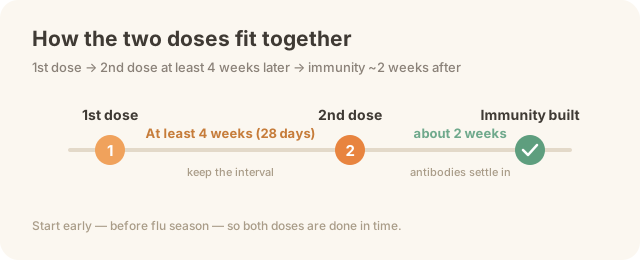
Even if you had only the first dose and 4 weeks have well passed, it's fine. You don't start over, you just carry on with the remaining second dose. If it slipped by, completing the second whenever you notice is enough.
Do we need to get it again every year?
Yes, getting a fresh flu shot each season is the basic rule. The circulating influenza strains shift a little each year, and the vaccine is remade to match the viruses expected that year. The immunity from last year's shot also weakens gradually over time.
So it's tempting to think "we got it last year, maybe we can skip this year," but yearly vaccination is recommended. The good news, though, is that a baby who had two proper doses last year needs just 1 this year. Once the immune foundation is built with two doses, from then on you just top it up with one dose a year.
How do we protect babies under 6 months?
A baby not yet 6 months old isn't eligible for the flu vaccine yet. Instead of building immunity through their own shot, babies this age are protected by the people around them acting as a wall.
The way to do it is for the family and caregivers who are often in close contact to get their flu shots. When parents, grandparents, and siblings who spend time close by are vaccinated and have immunity, it lowers the chance of the virus reaching the baby. A mother's vaccination during pregnancy can also help protect the newborn for a period. This approach, where the people around a baby get vaccinated first to shield them, is called "cocooning," in the sense of wrapping the baby like a cocoon.
Common questions before and after the shot
My baby seems to have a slight cold. Can they still get it?
Mild symptoms like a runny nose often still allow vaccination, but if there's a fever or your baby clearly isn't feeling well, it may be better to postpone. Whether it's a low-grade temperature or a real fever, and whether it's fine to go ahead now, is judged by the clinician who sees your baby at the day's visit, so you can follow their guidance.
Can't they get it if they have an egg allergy?
Having an egg allergy doesn't automatically rule out the vaccine. Depending on the severity of the allergic reaction, though, extra care may be needed, so be sure to tell the clinician about your baby's allergy history before the shot and decide whether and how to proceed after discussing it.
Can it be given on the same day as other vaccines?
The flu vaccine can often be given on the same day together with other vaccines. It can vary with your baby's schedule and condition, though, so check with the clinic about giving them at the same time.
We got the first dose but forgot the second
For a baby due for two doses, you can expect the planned immune benefit only once the second is done. Even if more than 4 weeks have passed, you don't start over, you just carry on with the second whenever you notice. Don't give up because it's late, be sure to complete that remaining dose.
Talk to a clinician first in these cases
The flu vaccine is safely recommended for most babies, but depending on your baby's condition there are times to postpone or adjust the approach. If any of the below apply, talk to a clinician before the shot.
- There's a fever on the day, or your baby clearly isn't feeling well
- Your baby has had a severe allergic reaction to eggs or a vaccine component
- There was a severe adverse reaction after a previous flu shot
- Your baby has a current illness or is taking medication
The final call on whether your baby is eligible, should postpone, or how many doses to get belongs to the clinic and clinician who see your baby in person. Use this article to grasp the broad guidelines, and confirm the decision that fits your baby at the point of care, which is safest. For how to care for a fever or a swollen injection site after the shot, see caring for a fever after vaccination.
Keeping a record makes it less confusing
Because flu dose counts split by age and history, it's easy to lose track each year of how many your baby has had. Jotting down when the first dose was and how many days later the second, and whether there was any fever or swelling afterward, makes the next season's decision much easier. If you note the dates and your baby's condition after each shot in Babyfolio's care log, you can see your baby's vaccination history at a glance even as the years pass.
To sum up
- The number of doses is set by age and history. For 6 months to under 9 years with a first shot or only one so far, it's 2; for 9 and older or already 2 or more, it's 1.
- For two doses, leave at least 4 weeks (28 days) between them, and since antibodies take about 2 weeks to build, finishing before flu season is ideal. Starting now isn't too late.
- Because the circulating flu virus changes each year, a shot every season is the basic rule. If you finished two doses last year, one is enough this year.
When you're unsure how many doses your baby needs, checking the record at the clinic giving the shot is the most accurate way to decide. When flu, a cold, and COVID symptoms are hard to tell apart, our guide on telling apart baby flu, cold, and COVID symptoms is worth a look too.