How to choose a baby sleep sack: TOG thickness and size by age
Choosing a sleep sack for the first time? Matching TOG thickness to room temperature, a size where the neck and arm openings aren't loose, and the swaddle-type versus sack-type distinction by age, plus overheating and safe-sleep cautions.
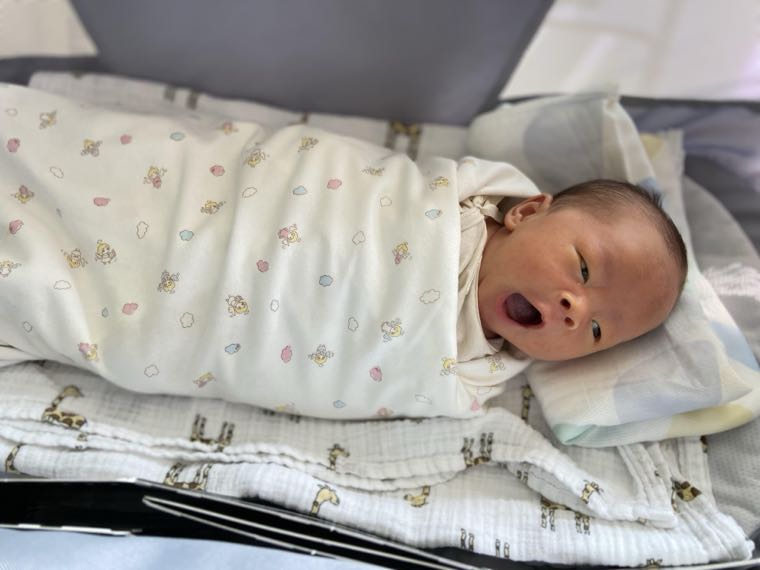
You worry they'll kick the blanket off and get cold at dawn, or the opposite, that it'll ride up over the face. That's when many parents turn to a wearable blanket, the sleep sack. But when you actually go to buy one, there are so many, TOG this, sizes that, that it's hard to know what to base your choice on.
Here's the core first. A sleep sack comes down to getting just three things right: the thickness (TOG) matched to the room temperature, an accurate, not-loose size, and a form suited to your baby's stage. Thicker isn't better, and bigger doesn't mean longer use. If the room is warm, pick a thin one; for the neck and arm openings, pick a fit close enough to the body that the baby can't slip down inside.
Rather than recommending a specific brand, this article lays out the "principles for choosing" so you can judge any product for yourself, from matching thickness to size and stage, what to wear underneath, and the safety points you must keep.
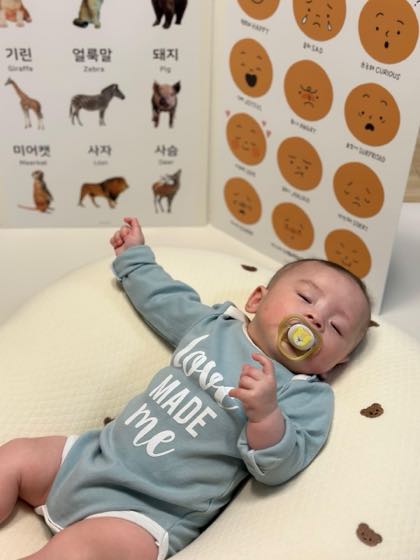
Why use a sleep sack instead of a blanket?
What makes a sleep sack good is that it's a "wearable blanket." A blanket you drape comes off and leaves the baby cold when kicked, and can be dangerous if it rides up toward the face. A sleep sack, worn on the body, won't come off in the crib, so even when the blanket gets kicked, it keeps body warmth to some degree.
Above all, it fits well with safe-sleep guidance. Public health authorities and the American Academy of Pediatrics advise clearing thick, loose blankets, pillows, and bumpers, things that could cover the face or be burrowed into, from an infant's sleep space. A sleep sack replaces the blanket while reducing those risks. So it suits parents who feel "I want to keep the baby warm, but blankets make me uneasy." The basics of clearing the sleep space are covered separately in how to put a baby to sleep safely without blankets or bumpers.
What is TOG? How to choose thickness
On sleep sacks you'll see numbers like "TOG 1.0" or "TOG 2.5." TOG is a unit for how warm the garment is, its degree of insulation. Lower is thinner and cooler; higher is thicker and warmer. So choosing thickness really means choosing the number that matches "the temperature of the room your baby sleeps in."
The basis for choosing thickness is not the baby's body but the room temperature. A baby's room is generally fine around 20-22°C, on the not-too-warm side, but when the room temperature changes with season and heating, the TOG should change with it. Using a thin summer sack straight through midwinter, or a thick winter one into early autumn, won't match the temperature.
Below is a table of commonly used TOG and underclothing combinations by room-temperature band. Standards differ a little by product, so check the product's own guidance too, and treat this only as a starting point. The final call is made by checking the baby's body, covered later.
| Room temperature band | Suggested TOG (thickness) | Clothing underneath |
|---|---|---|
| 24-27°C (summer / warm room) | 0.5 or under (thin) | Short-sleeve bodysuit, or diaper only |
| 20-24°C (moderate room) | Around 1.0 | One thin long-sleeve sleepsuit layer |
| 18-20°C (cool room) | Around 2.5 (thick) | Long-sleeve sleepsuit + thin underlayer |
| 16-18°C (cold room) | 2.5-3.5 (thickest) | Long-sleeve sleepsuit + long-sleeve underlayer |
No need to cling to the numbers alone. Placing one thermo-hygrometer in the room and checking the temperature near the crib makes choosing thickness much easier. How to match room temperature and humidity by age is covered in detail in baby night-sleep room temperature and humidity by age, so please read it alongside this.
How do you match size and stage?
Once thickness is set, size comes next. Here many parents pick a roomy one thinking "buy big, use longer," but a too-big sleep sack can actually be dangerous. If it's too large for the body, the baby can slide down inside and the face can end up buried within. So the standard for size is not "roomy" but "fits the body."
1. Keep the neck and arm openings not-loose
The most important spots are the neckline and arm openings. If the neck opening is big enough for the baby's head to slip through, it's too big. The face can slide down inside, so choose a size where the neck and arm openings sit close to the body and aren't loose. Conversely, tight enough to squeeze the neck or dig into the arms is uncomfortable too, so room enough for a finger to just pass through is about right.
2. The length and feet can be roomy
Unlike the neck and arms, the lower body and foot area are better with some room. Space to move the legs freely and kick helps hip development too. Whether the feet come out or move inside, room enough to bend and spread the legs comfortably is fine.
3. Choose the form for the stage
Sleep sacks split broadly into two types. In the newborn stage, a swaddle type that wraps the arms; as the baby grows, a sack type with the arms out. The swaddle type wraps the baby snugly and reduces waking from the startle reflex, but there's an important transition point. Once the baby starts showing signs of trying to roll, stop the arm-wrapping swaddle and switch to an arms-free form. With the arms bound while rolled over, it's hard to change position on their own, which is dangerous. This time usually arrives within the first few months with individual variation, so go by the "rolling sign" rather than by age. For size, checking a weight/height chart alongside months is more accurate.
What to wear underneath, and how
Think of the sleep sack as "one outer layer." Underneath, dress a sleepsuit or underlayer matched to the room temperature, then add the sack on top. As in the table above, a thin short-sleeve layer when the room is warm, or a long-sleeve sleepsuit plus a thin underlayer when it's cool, is usually enough.
The thing to be most careful of here is overheating. Worried they'll be cold at night, piling a thick sack plus lots of clothing on top tends to make them too warm instead. Overheating leads not only to heat rash and disrupted sleep but also ties into safety, so make "moderately cool and comfortable" your standard rather than "warm."
After dressing them, check by feeling the baby's body. Whether too warm or too cold is read at the nape and back, not the hands and feet, which are naturally a bit cool. If the nape or back is damp and hot during sleep, they're too warm, so drop a layer underneath or switch to a thinner sack. If cool, add one.
To use it safely, please keep these
A sleep sack is itself a tool that supports safety, but chosen or worn wrong it can become dangerous. Please keep the following four.
- Fit the size to the body; avoid loose ones. As said, large neck and arm openings let the baby slide inside. Rather than buying big to use long, choose the size that fits the body now.
- Avoid ones with hoods or ties. For sleep, a form without a hood pulled over the head and without ties or ribbons that wrap the neck or body is safer. In the crib, ties can be an entanglement risk.
- Zippers and snaps facing away from the face. Check that the fastening is sturdy and finished cleanly and that the zipper doesn't touch the chin or neck; a form with a cover over the zipper is convenient.
- Watch overheating, and keep the sleep space clear. Don't overdress, and note that overheating in a sleeping baby is known as a factor associated with sudden infant death syndrome (SIDS). And even with a sleep sack on, the basics of safe sleep stay the same. Put the baby down on their back, on a firm, flat surface, without soft items like pillows, blankets, or stuffed toys.
In short, a sleep sack is just "one layer that replaces a blanket," a tool used on top of the safe-sleep principle of on-the-back and flat. Don't add other bedding just because they're in a sack.
Washing, care, and when to switch
A sleep sack touches the baby's skin all night, so washing it often to keep it clean is good. Follow the product label for washing and drying, and for a thick sack with fill, check it's fully dry before use. Worn while not quite dry, it can feel damp and, oddly, cooler.
There are broadly two times to switch. First, when the season changes and the room temperature changes, swap the TOG. Keeping a few summer and winter sacks by temperature band to rotate is handy. Second, when the baby grows and the size gets small, move up to the next stage. Feet feeling cramped or the neck and arms squeezing is the sign. Conversely, don't skip to a size so large it's suddenly loose; moving up to the stage that fits the body now is safer.
Frequently asked questions
Q. Until when do you use a sleep sack?
There's no set age. As long as the baby isn't bothered and the size fits, continuing is fine. That said, when they stand and walk around and the fitting large sizes run out, they naturally graduate. Judge by the baby's condition and size.
Q. Arms in, or arms out?
It depends on stage and development. In the early newborn period with a strong startle reflex, the arm-wrapping swaddle type helps, but once signs of rolling begin, be sure to switch to the arms-free sack type. With arms bound after rolling, changing position is hard, which is dangerous.
Q. After graduating the swaddle, do I go straight to the sack type?
Yes, the arms-out sack type is the next stage. The baby moves the arms freely while the torso stays warm, so it suits a baby who has started rolling. It may feel new at first, so easing in from naps over a few days makes it smoother.
Q. Is a sleep sack needed in summer too?
If the room is hot, a thin TOG-0.5-or-under sack over one short-sleeve layer, or diaper only, is enough. In an air-conditioned room a thin sack can actually help keep warmth. If they seem hot, feel the nape and back and drop a layer.
Q. Since they're in a sleep sack, I don't need a separate blanket, right?
Right. A sleep sack is clothing that replaces a blanket, so there's no need to drape another blanket over it. Adding a blanket can create overheating or face-covering risk, so match the temperature with the one sack and keep the sleep space clear.
To wrap up
Choosing a sleep sack comes down to three things. First, choose the TOG to match the room temperature, thicker isn't better; the thickness matched to the room is the answer. Second, an accurate, not-loose size, so the baby doesn't slide through big neck and arm openings; rather than buying big to use long, choose to fit the body now. Third, the form for the stage and safe sleep, when rolling signs appear switch to the arms-free sack type, pick one without a hood or ties, and put the baby down on the back, flat, with the sleep space clear. Keeping a few days' record of how the night went after changing thickness lets you see the combination that fits your baby. Rather than numbers and sizes, matching the signals your baby's nape and back send is the answer that fits your own home.
References
- American Academy of Pediatrics (AAP), HealthyChildren.org — "A Parent's Guide to Safe Sleep" (wearable blankets, overheating, back to sleep) https://www.healthychildren.org/