Indoor Baby Play by Age for Cold Days When You Can't Get Outside
Stuck inside on a cold day and not sure how to keep your baby busy? Here's indoor play by age, from 0-3 months to around a year, plus play with things you already own, play instead of screens, and play safety. No expensive toys required.
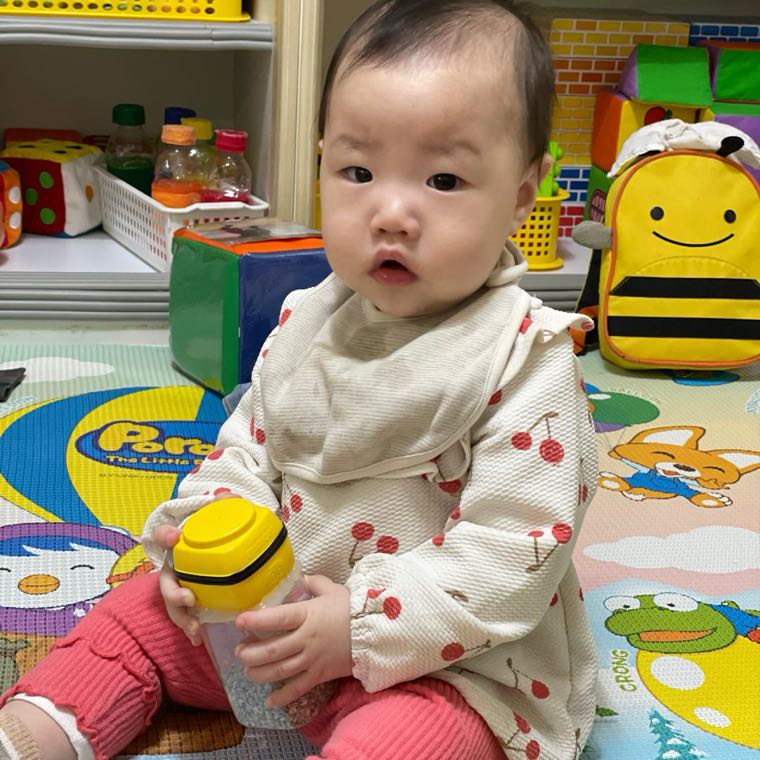
"It's way too cold to go anywhere, so what am I supposed to do with the baby all day?" If it's the dead of winter, a cold snap, or an air-quality day, that stuck feeling probably sounds familiar. You wonder whether you need to buy yet another toy, then wonder whether you should just put on a show, and it all starts to feel like a lot.
Here's the reassuring part first: you don't need expensive toys or screens to make it a good day. At this age, the best play is short back-and-forth moments where you meet your baby's eyes and take turns. A few household items and a few minutes of play are plenty to stimulate your baby's senses and development.
This guide walks through indoor play by age, from 0-3 months up to around a baby's first birthday, plus play you can do with things you already own, ways to play instead of handing over a screen, and how to keep play safe. Pick what fits your baby's age and try something today.
Table of contents
- Indoor play by age — 0-3, 4-6, 7-9, 10-12 months
- Play with things you already have
- Playing instead of screens
- A quick safety check for play
- Frequently asked questions
- Summary
1. Indoor play by age
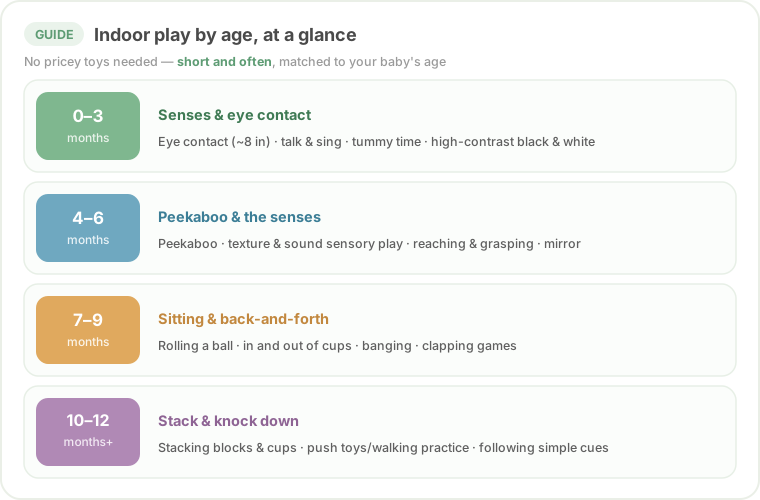
What a baby can do in play changes month by month, so choose with your baby's stage in mind. It doesn't have to be perfect. The real key is doing what your baby enjoys, in short bursts, often. Every baby is different, so treat the ages below as a general guide rather than a schedule.
0-3 months — senses and eye contact
At this stage, play is mostly about sensory input and bonding. Get your face about 8 to 12 inches from your baby's, make eye contact, and talk or sing. Vision is still blurry, so babies tend to love black-and-white and high-contrast pictures. When your baby is awake and you're watching, a little tummy time helps build neck and upper-body strength. A few seconds is fine at first, and if your baby dislikes being on the floor, start by laying them on your chest so you can meet their eyes.
4-6 months — peekaboo and the senses
This is when memory and focus take a noticeable leap. Babies tend to adore peekaboo, delighting in the anticipation of a hidden face reappearing. Sensory play that lets them look, listen, and touch — a soft cloth, a rattle, a crinkly fabric — is a hit too. Since this is the age of reaching to grab and starting to roll over (rolling usually shows up around 4 to 7 months), you can place something interesting just out of reach to encourage a little movement.
7-9 months — sitting up, giving and taking
Once a baby starts sitting on their own, play opens up. Rolling a ball back and forth builds the large muscles and hand-eye coordination. Putting things into a cup or bowl and taking them out, banging, and clapping games are all favorites. Exploring the inside of a drawer or basket is wonderful play too — just keep only safe items within reach.
10-12 months and up — stacking and knocking down
Hands get more precise now. Babies start stacking blocks or cups — around 10 to 12 months many will stack two, and banging or knocking them down counts as great play all the same. Pushing a push toy, or holding onto furniture to stand and step sideways (cruising), builds naturally toward walking. Following a simple cue, like "can you wave bye-bye?", is a delight too.
2. Play with things you already have
You don't have to buy a new toy — ordinary household things make wonderful playthings. Just keep safety in mind.
- Empty boxes: climb in and sit, put things in and take them out, crawl through like a tunnel.
- Towels and cloths: peekaboo, draping lightly over the face and pulling it away, laying one on the floor and tugging it along.
- Plastic cups and bowls: stacking, nesting, tapping with a spoon to make sounds.
- A water bottle: with the cap screwed on tight so it can't be swallowed, drop in a few dried beans or a little rice to make a shaker that rattles.
What matters isn't how many things you have, it's that you respond along with your baby. The same play becomes the best play when you meet their eyes and react with an "ooh, wow!"
3. Playing instead of screens
When you're cooped up on a cold day, the urge to just put on a show is real. For reference, the American Academy of Pediatrics recommends that for babies under 18 months, screen media be avoided except for video chatting. For 18 to 24 months, if you do introduce screens, the guidance is to choose high-quality programming and watch together, talking about what you see.
It doesn't have to be perfect. If a screen is unavoidable, keep it short and, when you can, watch alongside your baby and narrate. And instead of turning on a screen, swapping in a few minutes of back-and-forth play — the peekaboo or box games above — goes a long way. Video chatting with a grandparent counts as connection, not screen time in the usual sense, because it's live and interactive.
4. A quick safety check for play
Playing at home means it's worth staying on top of a few safety basics.
- Choking: babies put everything in their mouths. A handy test — if a small item fits inside an empty toilet-paper tube, it's small enough to be a choking hazard, so keep it away. Be especially careful with bottle caps, small buttons, and beans or beads.
- Falls: never leave your baby alone on a sofa, bed, or changing table. A single roll or wriggle can send them over the edge in an instant.
- Baby walkers: the AAP advises against baby walkers because of the risk of tipping and falls, including down stairs. Support walking practice instead with pulling up on furniture or a push toy.
- Keep plastic bags, cords, and anything that could choke or wrap around your baby well out of reach.
Frequently asked questions
Q. Do I have to buy toys for play? No. What matters most for development at this age isn't an expensive toy, it's interaction with you. Cups, boxes, and towels from around the house are plenty, and exploring everyday objects is actually great stimulation.
Q. My baby hates tummy time. It doesn't have to be long to start. Try a few seconds at a time while your baby is awake, often, and if they dislike the floor, begin by laying them on your chest so you can meet their eyes. You can stretch the time little by little.
Q. No matter how I play, my baby doesn't seem to respond. Every baby's pace and favorite kinds of play are different. That said, if there's very little eye contact, or the movement you'd expect for your baby's age seems well behind, it's reassuring to check with your pediatrician rather than worrying alone. For what to look at when development seems delayed, we covered the signs worth watching with motor development.
Summary
Even on days too cold to head out, there's plenty to play at home. 0-3 months is eye contact and tummy time, 4-6 months is peekaboo and the senses, 7-9 months is rolling a ball and in-and-out play, and around a year it's stacking and walking practice — matched to your baby's age, in short bursts, often.
Expensive toys and screens aren't must-haves. The things you already own, plus your own responses, are the best playthings there are. If you're curious about development overall, it's worth looking at the 0-12 month milestones alongside this. Keep safety in mind, and start light today with just one thing your baby loves.
Sources<br> American Academy of Pediatrics — Where We Stand: Screen Time (screen media discouraged under 18 months except video chat; 18-24 months choose high-quality media and co-view)<br> American Academy of Pediatrics / HealthyChildren.org — Baby walkers: a dangerous choice<br> Seattle Children's — Toy Safety (toilet-paper-tube choking test; items at least about 1¼ inches across)<br> CDC — Important Milestones: Your Baby by Age (developmental milestones 0-12 months)<br> KidsHealth (Nemours) — Choosing Safe Toys