How to Wash Baby Clothes in Winter, From the First Wash to Drying When Nothing Dries
In winter, baby clothes take forever to dry and start to smell musty. Here's the whole routine in one place, from pre-washing new clothes and picking a gentle detergent to separating baby laundry, rinsing well, and drying fast and fully in cold weather.
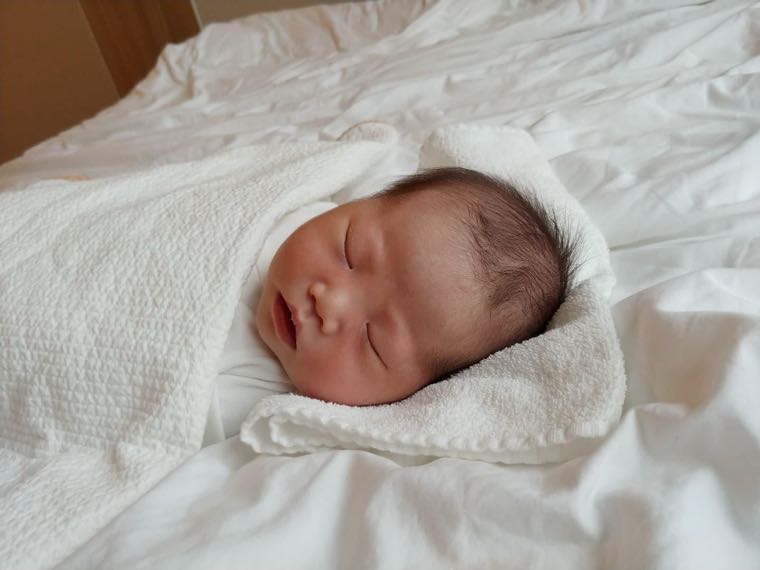
"It's winter, so laundry takes forever to dry anyway, and now I'm wondering if baby clothes need their own wash too." When the weather turns cold, clothes dry slowly, stay damp, and pick up a musty smell, so washing baby clothes can start to feel like a real chore. And if this is your first baby, you've probably paused over the basics too: do I wash new clothes before using them, and which detergent is actually okay?
Here's the short answer first: once you know a few simple principles, it's easier than it looks. Wash new clothes once before your baby wears them, use a gentle detergent, keep baby laundry separate from the adults' and rinse it well, and in winter, get everything dry quickly and completely. That's really most of it.
In this guide we'll start with how to dry baby clothes in winter when nothing seems to dry, then move through the first wash for new clothes, choosing a detergent, separating and rinsing, and item-by-item tips. Let's go through it one piece at a time so laundry feels like less of a hassle and your baby's skin stays comfortable.
Table of contents
- Winter drying: when clothes won't dry and start to smell
- Wash new clothes once before your baby wears them
- Choosing a detergent and fabric softener
- Separate the laundry and rinse it well
- Item-by-item tips and treating stains
- Frequently asked questions
- Summary
1. Winter drying: when clothes won't dry and start to smell
In cold weather, drying is the real headache. Hang clothes indoors and they dry slowly and stay damp, and laundry left half-dry gives bacteria a chance to grow, which is where that sour, musty smell comes from. The key is simple: dry it fast, and dry it all the way.
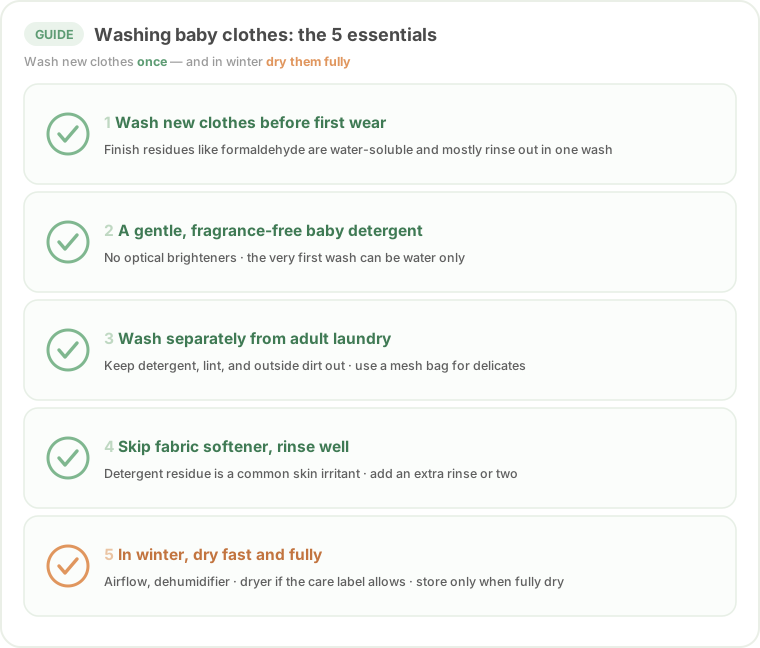
- Keep the air moving. Open a window to air the room, and run a fan or dehumidifier so the air circulates. Clothes dry much faster that way. Give each piece some space on the line or rack instead of bunching it together.
- Use the dryer when the label allows it. If the care label okays it, a dryer's warm air is great for getting clothes fully dry quickly. Just double-check the label on heavier outerwear or anything with trims and embellishments, since those can be more delicate.
- Fold only once everything is bone dry. Putting slightly damp clothes away in a drawer is what leads to odor and mildew. Make sure pieces feel crisp and dry before you store them.
If you're air-drying in sunlight, gentle sun or shade is best. Long stretches in direct sun can fade colors over time.
2. Wash new clothes once before your baby wears them
Brand-new baby clothes can look perfectly clean, but it's worth washing them once before your baby wears them. To keep fabric from wrinkling and to finish it, manufacturers often treat garments with chemicals such as formaldehyde-based finishes, and those residues can irritate a baby's sensitive skin. People sometimes call the reaction "new clothes" irritation or textile dermatitis.
The good news: these finishes are water-soluble, so a single wash removes most of the residue. Pay extra attention to anything that sits right against the skin, like bodysuits, swaddle blankets, and undershirts, and rinse those until no detergent is left behind. Hand-me-downs are worth a quick wash too, since they can pick up dust while they're stored.
3. Choosing a detergent and fabric softener
For baby clothes, a gentle detergent is a safer bet than a standard adult formula. Here's what to look for.
- Gentle and low-irritation. A mild, pH-balanced formula is kinder to both fabric and skin. Many parents reach for a "free and clear" style detergent.
- No optical brighteners. Those added whiteners make clothes look brighter but aren't ideal for baby laundry.
- Fragrance-free or lightly scented. Strong fragrance can linger in the fabric and become a source of irritation.
It's usually best to skip fabric softener on baby clothes. The fragrance and ingredients stay in the fibers and can reduce how well towels and swaddles absorb. If you really want that extra softness, use a small amount of a baby-specific product. And one shortcut worth knowing: for that very first wash of new clothes, plain water with no detergent is perfectly fine.
4. Separate the laundry and rinse it well
It's a good idea to wash baby clothes separately from the adults' laundry, so detergent, lint, and outside grime from grown-up clothes don't transfer over. Group pieces that might bleed by similar colors, and put anything delicate into a mesh laundry bag so it doesn't snag.
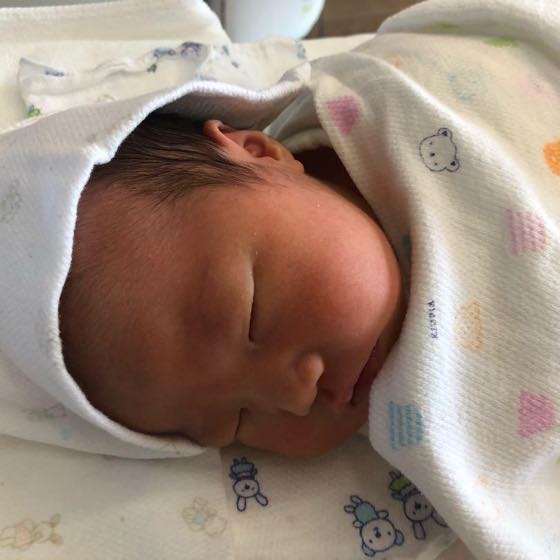
The part that matters most is the rinse. Leftover detergent in the fibers is one of the most common causes of skin irritation, so giving baby clothes an extra rinse cycle or two is a safe habit. If your machine has a baby or sanitize cycle, that can help too.
5. Item-by-item tips and treating stains
What you watch for shifts a little depending on the type of clothing.
- Bodysuits, swaddles, and undershirts. These touch the skin directly, so rinse them thoroughly. Cotton pieces can often handle warm water within whatever the care label allows.
- Outerwear, puffer jackets, and heavy pieces. Always follow the care label here. Down-filled jackets and anything with embellishments are easy to damage.
- Stains from food, drool, and formula. Rinse in cold water first. Protein stains can set if you hit them with hot water. Spot-treat with a gentle detergent, then run the full wash, and they usually come out.
If you're also using cloth diapers, their washing and care routine is a bit different from regular clothes, and we cover that separately in our guide on washing and caring for cloth diapers. And if your baby keeps getting a rash, or it seems to be getting worse, it's better to check in with a dermatologist or pediatrician than to keep tweaking your laundry routine on your own.
Frequently asked questions
Q. Can my baby just wear new clothes right out of the package? It's better to wash them once first. Chemical residues left from manufacturing can irritate the skin, and most of it washes out in a single cycle. For anything that sits right against the skin, rinse especially well.
Q. Do I have to use fabric softener? No. It's usually best to skip it on baby clothes. The fragrance and residue can irritate the skin and can also reduce how well towels and swaddles absorb. If you want it, use just a small amount of a baby-specific product.
Q. In winter my laundry won't dry and it smells. Leaving clothes half-dry lets bacteria grow, and that's what causes the smell. Air the room, use a dehumidifier, and run a fan to move the air so things dry fast, and if the care label allows it, finish them in the dryer. The key is storing clothes only once they're completely dry.
Summary
Washing baby clothes really comes down to a few principles. Wash new clothes once before your baby wears them, use a gentle detergent and keep baby laundry separate from the adults', then rinse it well, and skip the fabric softener. In winter, the other half of the job is drying: air the room, pull out the humidity, and use the dryer when the label allows, so everything dries fast and fully and never has a chance to smell.
Care labels differ from one garment to the next, so always check the label on heavier outerwear, and if your baby's skin keeps getting irritated, talk with a dermatologist or pediatrician. Once these basics become habit, even winter laundry gets a lot easier.
Sources
American Academy of Dermatology Association — Caring for a child's sensitive skin and preventing irritant contact dermatitis
U.S. Consumer Product Safety Commission — Guidance on formaldehyde in textiles and children's products
American Academy of Pediatrics (HealthyChildren.org) — Baby skin care and laundry basics
Manufacturer care-label guidance — Always follow the garment's care label; products vary, and if skin irritation persists, consult a dermatologist or pediatrician.